AI Web Design Is Making Templates Obsolete
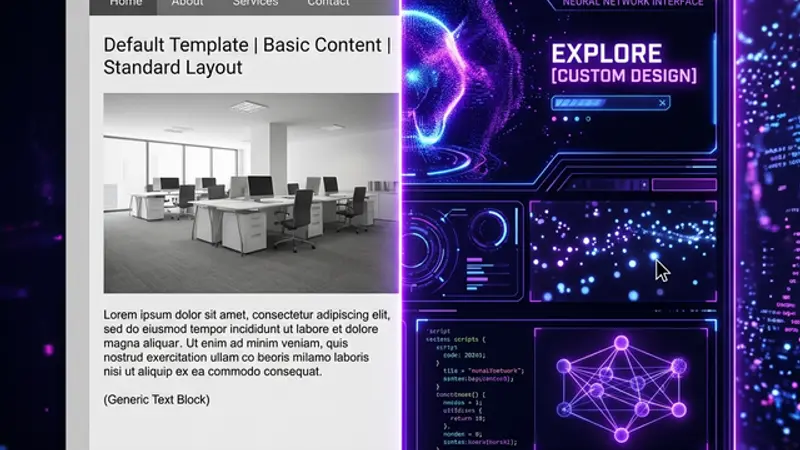
Templates force you to start with someone else's design and fight it. AI lets you start from zero and describe what you want. The shift from template selection to experience description is the biggest change in web design since responsive design.
Templates Were Never the Answer — They Were the Compromise
In 2018, a friend spent four months building a portfolio website on WordPress. Picked a $60 theme. Installed 14 plugins. Spent three weeks wrestling the theme into something "close enough." The result looked like the other 40,000 people who bought the same theme — because it was.
In 2025, someone described the same portfolio to an AI in three sentences. Built from a blank file. Took three weeks. Looks like nobody else's site — because it isn't.
AI-assisted web design eliminates the need for templates by making custom, from-scratch design accessible to anyone who can describe an experience — not just those who can code one. The template was never the right tool for the job. It was the only affordable option. Now it isn't.
What is AI-assisted web design? AI-assisted web design is the practice of building custom websites from nothing using AI tools as the primary execution partner — translating vision briefs, experience descriptions, and feedback into code, layouts, and components. Unlike template-based design, where you start with someone else's decisions and customize within their constraints, AI-assisted design starts blank. The vision drives the build; the AI executes it.
For 20 years, the workflow was the same: pick a theme, customize what you can, accept the rest. The "rest" is someone else's structural decisions. Someone else's spacing system. Someone else's component hierarchy. Your brand fights the template for dominance — and the template usually wins.
WordPress solved this. WordPress codified the compromise. Choose from 60,000 themes. None of them are yours.
The WordPress Trap
WordPress powers 43% of the web. That number is staggering — and it explains something: browse virtually any industry blog, small business site, or portfolio, and you can identify the WordPress skeleton underneath it. The custom header. The predictable footer. The blog archive that looks identical to every other WordPress blog archive.
The plugin ecosystem made this worse, not better:
| Plugin Category | Count | The Problem |
|---|---|---|
| Page builders | 200+ | 5 win market share; all export incompatible shortcodes |
| SEO plugins | 150+ | Each one "requires" its own workflow |
| Performance | 100+ | Often conflict with each other and the theme |
| Sliders/carousels | 300+ | All of them create jQuery dependencies |
Every plugin adds code that wasn't designed for your site. The dream is flexibility. The reality is layers of incompatible decisions made by strangers.
Each plugin you install is a design decision made by someone who doesn't know your brand. Over time, your site becomes an archaeology project — layers of other people's choices compressed into something that kind of looks like yours.
What AI-Assisted Development Changes
When you use AI to build from scratch, the starting point is nothing — a blank file and a description. This isn't harder. It's fundamentally different.
| Template Workflow | AI-Assisted Workflow |
|---|---|
| Find a theme that's "close enough" | Describe the experience you want |
| Fight the template's assumptions | Watch AI build it from scratch |
| Compromise on what you can't change | Override anything that doesn't feel right |
| Result: someone else's vision, slightly tweaked | Result: your vision, executed |
The shift is from selection to execution. You're not choosing from a menu. You're commissioning something built for you.
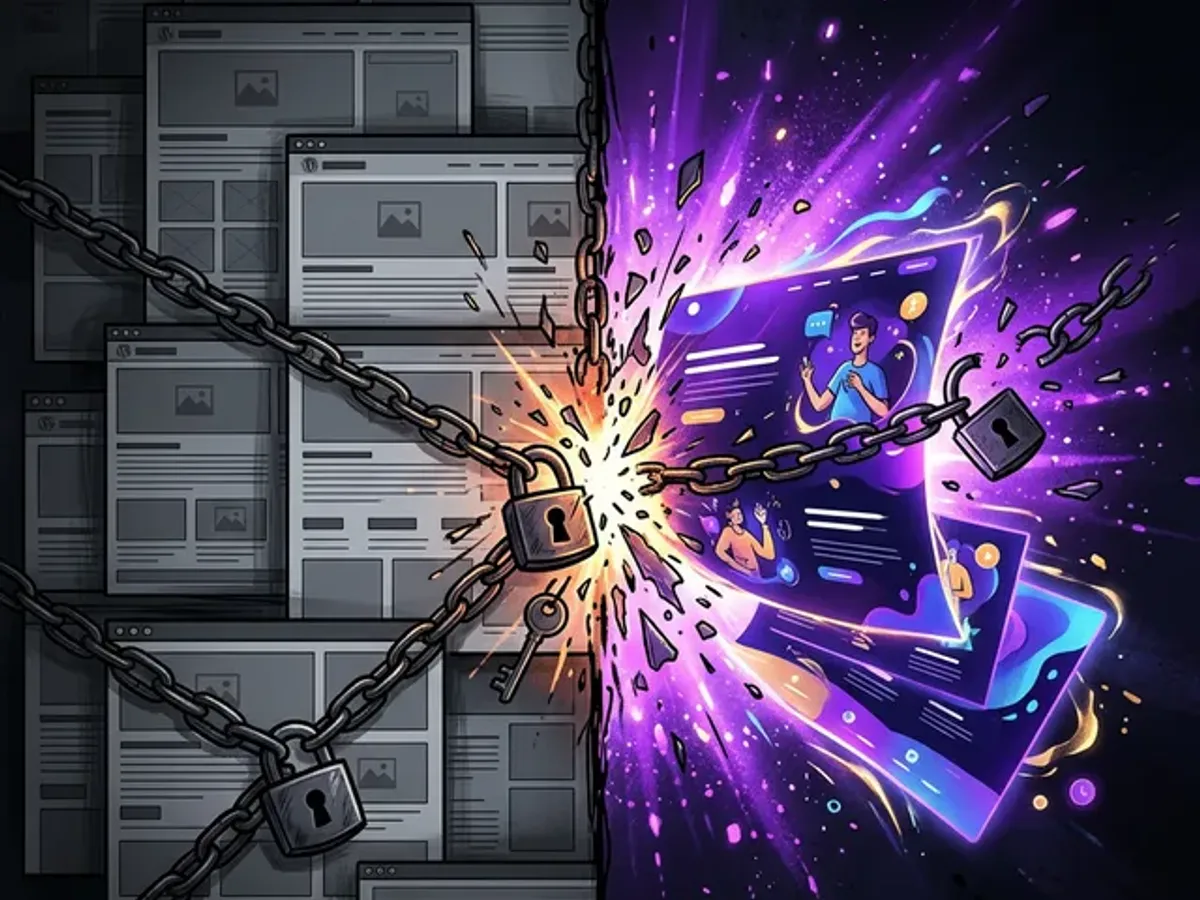
Describing Experiences Instead of Features
The language of template selection is features: "I need a 3-column grid, a hero section with video, and a newsletter signup at the footer."
The language of AI-assisted design is experience: "I want visitors to feel like they've found something underground — like they discovered this site rather than found it through Google."
Only one produces a website with personality.
When you say "underground find," AI understands: structure that reveals rather than declares, colors that feel purposefully different, copy that assumes you already know the basics. You communicated an entire design brief in three words.
AI can translate emotional descriptions into specific design decisions. It's been trained on vast amounts of human communication about design, aesthetics, and experience. A template vendor heard "3-column grid" and built one. AI heard "underground discovery" and built a personality.
"It should feel like [site you admire]" is one of the most effective AI design briefs. A single reference communicates color, typography, density, personality, and interaction philosophy in one sentence. Give AI a reference, not a spec list.
The Custom Stack Story
This site runs on no templates. Zero. Here's what exists instead:
| Component | Details |
|---|---|
| CSS design system | Typography scale, spacing tokens, color variables — all from scratch |
| React components | 47 custom UI components built for this specific site |
| MDX rendering | Blog components designed for this content |
| Admin dashboard | SEO audit, scheduling, keyword research tools built in-house |
| Animations | All CSS-first, GPU-composited, performance-tested |
Every one of these components started with a description and was built with AI assistance. The compound time saving: 10 months of build time compressed into 6 weeks.
The creative process is what made this possible — not the AI alone, but the rhythm of vision, execution, and override that AI-assisted development enables.
What Custom-Built Doesn't Mean
The biggest misconception stopping people from building custom: custom means complex, slow, and expensive. It doesn't.
| What people think custom-built means | What it actually means |
|---|---|
| Requires deep coding knowledge | Requires clear vision and taste — AI handles the code |
| Takes longer than a template | Takes longer to start — delivers faster iteration once underway |
| Too expensive for small projects | Removes all recurring plugin license costs ($885–$1,185/yr on a typical WP stack) |
| Overkill for a simple site | Right-sized by definition — built only for what you actually need |
| Risky — what if something breaks? | You own the code; any developer can maintain it — no plugin vendor dependency |
The template trap is the assumption that "starting with something" is easier than "starting from nothing with help." The template gives you a starting point and a ceiling. AI-assisted custom gives you nothing to start with — and no ceiling.
A typical WordPress plugin stack costs $885–$1,185/year in plugin licenses alone, before hosting. A custom-built site on Vercel can cost $0–$20/month — and you own every line of code. Custom isn't always cheaper, but the money goes to infrastructure you control, not subscriptions to software built for someone else.
The Learning Curve Is Smaller Than You Think
The objection: "Custom development requires coding knowledge I don't have."
The shift: describing an experience requires no coding knowledge. The AI handles translation from description to code. You read what it built. You say what's wrong. It fixes it. You don't need to understand React to say "the spacing feels too tight" or "this looks too corporate."
The skills you need:
Know what you want visitors to feel. Not what you want the page to contain — what emotional state it should create. This is vision engineering, and it's the only skill that can't be automated.
Knowing when something doesn't feel right — even when you can't explain why. This is your most valuable constraint. "It looks too generic" is a legitimate design note.
Describing problems in feeling-based terms, not technical specs. "Too cold" tells AI more than "increase the saturation by 10%." Your emotional vocabulary is the interface.
You need to code. You need to see clearly and describe clearly. The AI codes.
The template was the compromise of a world where custom development was expensive and slow. That world doesn't exist anymore. The description is the creative act that replaced it — and the only cost is the clarity to articulate what you want.
The 60,000 themes didn't make websites better. They made them interchangeable. The blank file does the opposite.
→ Your Web Developer Probably Can't Code — what "custom-built" actually means in an industry where most web development is configuration, not code.
This post is part of our AI-Assisted Design series — the complete guide to building on the web with AI from brief to deployment.