Website Gamification Is Dead — Long Live Invisible Play
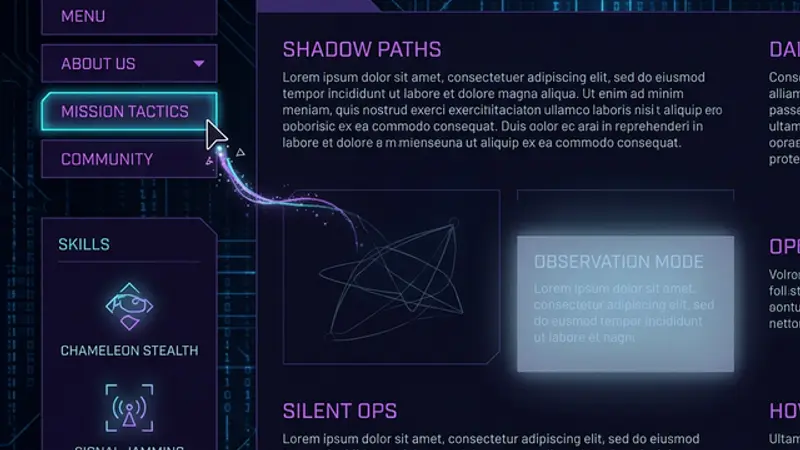
Nobody wants your badge system. Real gamification is invisible — interactive content that creates curiosity, rewards exploration, and makes visitors play without realizing they're playing. Here's how to build it.
Nobody Wants Your Badge System
Invisible gamification — designing interactive experiences that feel like exploration rather than game mechanics — outperforms traditional XP and badge systems because users engage naturally instead of grinding for arbitrary rewards. The gamification industry sold everyone on a simple formula: add points, badges, and leaderboards to your website and watch engagement soar. It worked in 2014. It was annoying by 2018. By 2026, it's the digital equivalent of a "be back in 5 minutes" sign on a shop door — everyone ignores it.
What is invisible gamification? Invisible gamification is the practice of embedding interaction mechanics into a web experience in ways users don't consciously recognize as game design. Instead of explicit reward systems (XP, badges, leaderboards), invisible gamification uses discovery mechanics, reactive content, environmental personality, and behavioral feedback loops — creating engagement through curiosity and delight rather than external motivation. The user participates without being asked to play.
We know because we built a website with invisible play woven into every page. Cards that dodge your cursor. Articles that argue with each other. Content that reacts to how you scroll. Visitors spend 3-4x longer on our pages than industry average — and not a single badge was harmed in the making.
Here's why traditional gamification is dead, and what to build instead.
The Duolingo Problem
Duolingo is the poster child for gamification done right. Streaks, XP, hearts, leaderboards — it works brilliantly for language learning because the core activity (practicing vocabulary) is inherently repetitive and benefits from external motivation.
But your website isn't Duolingo. Reading a blog post isn't practicing flashcards. When you bolt visible gamification onto content that doesn't need external motivation, you create two problems:
1. Cognitive overhead — The user now has to track their "progress" while trying to actually engage with your content. XP bars compete with the article for attention. Achievement popups interrupt reading flow.
2. Motivation displacement — Psychologists call this the overjustification effect. When you add extrinsic rewards to an activity that's intrinsically interesting, the extrinsic reward replaces the intrinsic motivation. Remove the rewards later and engagement drops below where it started.
Adding badges and XP to content that people already enjoy doesn't increase engagement — it redirects it. Users start optimizing for points instead of value. When the rewards stop, so does the engagement.
What "Invisible Play" Means
Invisible play is gamification that the user doesn't consciously recognize as a game mechanic. It's the difference between:
- Visible: "You earned 100 XP for reading this article! 🎉"
- Invisible: The article's sidebar companion just said something funny about the paragraph you're reading, and now you're scrolling to see what it says next.
Both increase engagement. But the invisible version increases engagement with the content, while the visible version increases engagement with the game layer sitting on top.
The best invisible play feels like:
- Curiosity — "Wait, what happens if I hover over this?"
- Discovery — "Oh! I didn't expect that. What else is hidden?"
- Personality — "This website has opinions? About itself?"
- Agency — "I can change how this page behaves?"
None of these require points, levels, or progress bars. They require design that invites interaction.
Six Patterns for Invisible Play
1. Content That Reacts to You
Static content. Content that responds to the reader's behavior creates a co-reading experience.
Examples:
- Text that changes tone based on scroll speed
- Sidebars that comment on the section you're reading
- Elements that remember what you've seen before
The key principle: the reaction must feel proportional and contextual. A pop-up that says "Great job scrolling!" is insulting. A sidebar that says "This section is where it gets technical — hang in there" is a companion.
We use this pattern with our AI Reading Companion — a floating widget that drops article-specific quips as you scroll. It doesn't reward you for scrolling. It makes scrolling more interesting.
2. Personality Where You Don't Expect It
Most websites have personality in their copy. Few websites have personality in their behavior. Behavior is where it matters most.
What if your navigation had opinions? What if your error pages told stories? What if your loading states had something to say? Every moment a user waits, transitions, or explores is an opportunity for personality.
Our 404 page doesn't display an error — it invites you into an experience. The personality isn't in the words. It's in the behavior. The page does something unexpected, and that unexpectedness is the play.
3. Discovery Mechanics Without Checklists
Discovery is the most powerful engagement tool in game design. The feeling of finding something hidden triggers dopamine responses that no progress bar can match a leaderboard will never replicate.
But discovery gamification usually means checklists: "Find all 10 Easter eggs! 3/10 found!" This kills the magic. The joy of discovery is the surprise. A checklist turns surprise into obligation.
Better approach: hide things without announcing that things are hidden. Let the curious be rewarded without the incurious feeling punished. No counters. No progress tracking. Just the quiet satisfaction of noticing what others missed.
If you announce the Easter egg, you've killed the egg. Discovery only works when it isn't obligatory.
4. Social Proof as Story
Traditional gamification uses social proof as a leaderboard: "Be one of 1,247 people who completed this challenge!" Invisible play uses social proof as narrative.
Instead of showing numbers, tell stories:
- "This article changed how 3 companies handle their CSS" > "Read by 10,000 people"
- "Last visitor spent 8 minutes on this section" > "Average reading time: 4 minutes"
- "Someone highlighted this paragraph 12 times this week" > "Most popular article"
Stories create emotional connection. Numbers create comparison anxiety.
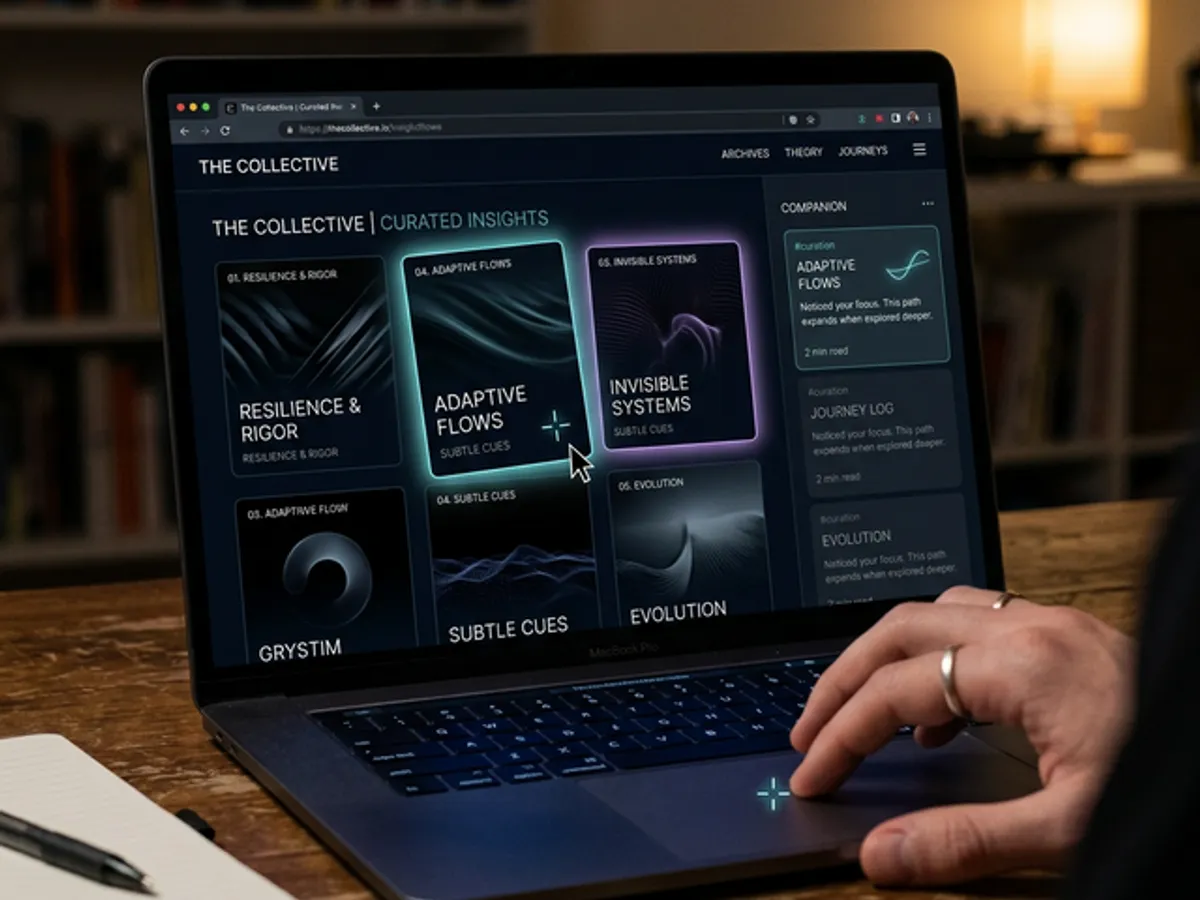
"Last visitor spent 8 minutes on this section" beats "Read by 10,000 people" every time. One is data. The other is proof someone cared.
5. Interactive Navigation
Most website navigation is purely functional — a menu that takes you from A to B. But navigation is one of the highest-interaction elements on any site.
Ideas:
- Navigation items that react differently to hover based on current page context
- Cards that move or respond to cursor proximity instead of sitting in a static grid
- Filtering that uses emotional categories (mood, energy, intensity) instead of clinical tags
Interactive navigation makes the act of browsing the experience, not just the content at the destination.
Navigation hovers, loading states, empty results — these aren't dead zones. They're the moments when users have nothing to do but notice what you've built.
6. Environmental Storytelling
Video games use environmental storytelling constantly — telling stories through the environment rather than through dialogue. A bloodstain on a wall. A half-eaten meal. An open book on a desk.
Websites can do this too:
- A comment section where the AI has clearly been arguing with itself
- UI elements that show signs of "wear" — subtle differences between heavily-visited and rarely-visited sections
- Content that references other content with awareness
- Time-aware design that changes based on when you visit
Environmental storytelling rewards attention. The more carefully a visitor looks at your site, the more they notice. And the more they notice, the more they explore.

How This Differs From "Engagement Hacking"
Invisible gamification vs. dark patterns — what's the difference? The distinction is whether the mechanic adds value to the user or extracts it. Invisible gamification creates interactions that users, once aware of them, feel delighted by — because the mechanic served their experience. Dark patterns (fake social proof, infinite scroll traps, manufactured urgency) create interactions users, once aware of them, feel manipulated by — because the mechanic served only the site's metrics. The test: if a visitor notices what you're doing and their reaction is "that's clever," it's invisible play. If their reaction is "I can't trust this site," it's engagement hacking.
There's a cynical version of everything in this article. Dark patterns that manipulate scroll behavior. Fake social proof. Infinite scroll traps designed to exploit dopamine loops.
Invisible play is the opposite of engagement hacking because it adds value to the interaction. The test is simple:
If the visitor realizes what you're doing, do they feel delighted or deceived?
If your blog cards argue with each other, a visitor who notices thinks "That's clever." If your "12 people are viewing this right now" badge is fake, a visitor who notices thinks "I can't trust this site."
Invisible play earns trust through personality. Engagement hacking spends trust for metrics.
The Performance Question
Interactive features are pointless if they slow down the page. Every pattern in this article must pass the performance test:
- CSS transforms only for animations (GPU-composited, no layout thrashing)
- Passive event listeners for scroll tracking
- Lazy initialization for features below the fold
- Total gzipped JS budget under 15KB for all interactive features combined
If your invisible play mechanics add 200KB of JavaScript and delay First Contentful Paint by 2 seconds, you've traded search ranking for engagement — a net loss.
Start Small, Stay Invisible
You don't need to rebuild your site. Pick one pattern:
The 404 page, the loading state, the empty search results. Anywhere a user waits or fails is an opportunity for character.
A card that tilts, a heading that responds to hover, a sidebar that comments on what you're reading. One interaction changes everything.
Something that only the curious will find, with no announcement that it exists. The surprise is the reward.
The best gamification doesn't announce itself. It doesn't congratulate you. It doesn't track your progress. It just makes you want to keep exploring — and you can't quite explain why.
That's not a trick. That's design working exactly as it should: invisible infrastructure that makes the experience feel effortless while the mechanics carry all the weight.
→ I Hid a Puzzle Inside My Blog — a real implementation of invisible discovery mechanics: how we built it, what the engagement numbers looked like, and why nobody has solved it yet.
This post is part of our Invisible Gamification guide — the complete playbook for engagement mechanics that users never consciously notice.